Featured

Summer 2023!

My FIVE STAR Historical Fiction Selections

The solemness of Memorial Day has led us, once again, into the beautiful summer season, more daylight, more sun and water, and, I hope for all of us, more time for books.

I’ve been a little tough with my ratings of recent books, and so I am looking back over my past two years of reviews in order to recommend some FIVE STAR BOOKS for summer.

This first Summer post is for the historical fiction fans. I offer two selections, “The Things We Cannot Say” by Kelly Rimmer and “The Nurse’s Secret” by Amanda Skenandore. One will surely inspire tears, and one laughter.

“Slipping between Nazi-occupied Poland and the frenetic pace of modern life, Kelly Rimmer creates an emotional and finely wrought narrative that weaves together two women’s stories into a tapestry of perseverance, loyalty, love and honor. The Things We Cannot Say is an unshakable reminder of the devastation when truth is silenced…and how it can take a lifetime to find our voice before we learn to trust it.”– from the publisher’s synopsis

I honestly did not expect to love “The Things We Cannot Say” for a few reasons…

First of all, I had not heard of the author. Secondly and quite honestly, I am growing weary of the two narrator, past and present, point-of-view novels. However, I found both characters’ stories intriguing, especially Alina’s, of course.
This book is part mystery, part suspense, but predominately a love story. Kelly Rimmer’s plot centers on the characters “Alina” and “Tomasz,” their simple and beautiful life in Poland, their violent and destitute existence after the German invasion, and their path forward. The permeating message is that of love, a deep abiding love which embraces sacrifice and loyalty.
For me this was a wonderful 2-day read, and I loved the ending. Enjoy.

—————————————————————————————————————————-
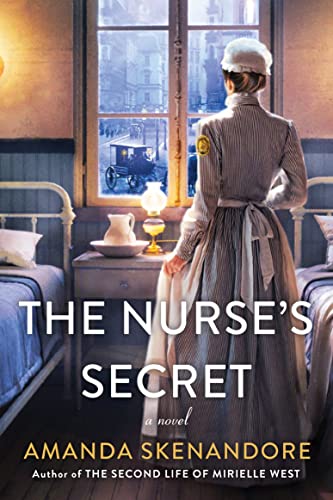
“The Nurse’s Secret” by Amanda Skenandore was a pleasure to read.

The main character Una Kelly is an Irish American young woman living in New York in the 1880’s. After her mother’s death and her father’s descent into addiction, Una survives on the streets as a professional pick-pocket for the later part of her teens and early 20’s.

The book does not sugar coat the poverty and prejudice which defined the tenement lives of the Irish in NYC in the 1800’s. Rats, roaches, and lecherous cops provide some of the obstacles which Una faces in her quest to survive day to day. One decision on Una’s part to fetch a little extra cash will put her in the proverbial wrong place at the wrong time, and she is falsely accused of murder. I will admit that this protagonist, like a rebellious teenager, almost drove me crazy. I don’t know how many times I shook my head, or how many times I wanted to say, “No Una, please don’t do it.”

Without any means by which to defend herself against the accusations, street-smart Una manages to break out of custody and devise a highly irregular plan to hide from the police. She will join a class of young women at Bellevue Hospital in a revolutionary program to train well bred women as professional nurses. The uniform and the walls of the institute will protect her from recognition. Of course, there is the matter of admissions criteria… I won’t spoil how Una accomplishes this feat; suffice it to say she creates a few falsehoods and revisits her strained childhood memories of her mother’s instructions on deportment and etiquette.

The author is a nurse as well as a writer, and her exacting details of the medical procedures were almost as fascinating as the immensely creative plot. It was refreshing to read an excellent piece of recently written historical fiction focused on something other than WWII. Historical value, entertaining, and highly enjoyable.

Featured

What I’ve been reading lately…

I have been studying for my Florida real estate exam, and I haven’t kept up with my blog. In the meantime, I have been reading as usual. And now that I have passed my course and the licensing exam, I am so happy to be able to connect with you again and tell you about what I have been reading this spring.

A few books were just not worth writing about here on my blog, but fortunately a couple books were fantastic and illuminating!

I have decided to put it all out here on the table, the good, bad and ugly! I would love your comments. Perhaps I missed something valuable in a few of these, so please let me know if you think I’ve been too harsh with my criticism and ratings. (Please post here on this site rather than on my FB page).

“Violeta” by Isabel Allende 1/5 stars

“In Five Years” by Rebecca Serle 2 /5 stars

“The Hunting Party” by Lucy Foley 3/5 stars

“The Lost Apothecary” by Sara Penner 4/5 stars

“The Boys from Biloxi” by John Grisham 5/5 stars

“A Fever in the Heartland; The Ku Klux Klan’s Plot to Take Over American, and the Woman Who Stopped Them: by Timothy Egan 4/5

I am going to start with the best!

“The Boys from Biloxi” John Grisham

Timothy Egan’s “A Fever in the Heartland”

Prior to reading “A Fever in the Heartlands,” I did not realize the extent of the KKK’s reach into the northern states. Egan’s sources, photos, and prose reveal an unsettling influence of the Klan’s influence in Indiana and other states that had been non-slave holding.

Timothy Egan presents the real story of David Stephenson, narcissist from Texas, who had deserted his first wife and child and fled to Indiana, where his charismatic personality allowed him to lure thousands, if not millions to his racist, ethnocentric view. Stephenson’s empire grew to the point where, as he stated, he “owned” the police, the courts, and the entire law of the state. He abused and raped women at will, bought out Protestant clergy, authorized lynchings of Blacks, and threatened and killed immigrant Catholics. The highest possible hypocrite, Stephenson publicly proclaimed a Christian faith and love for American, but his private life was that of a lecher.

I had to read sections at a time and take breaks. Egan’s story of Stephenson and the KKK of the 1920’s is brutally honest. We need to take a deep breath and think about what lessons can be learned here.

****************************************************************************************

John Grisham did not disappoint with “The Boys from Biloxi.” At times this book read like non-fiction, and I mean that in a good way. The characters and events are historical, but Grisham wrote in a way that every detail seemed perfectly real, which increased the intensity level.

The stories of the Croatian families’ first generations in America create a study in family sociology. Both patriarchs arrive with little if anything, work hard, establish homes, participate in the life of the ethnic community, contribute time and treasure to the church, and raise families. However, their grandsons will end up on opposite sides of the law, indeed opposite sides of morality. One a casino owner with illicit sex workers; the other a District Attorney, deeply committed to justice and decency, to the point of risking his own life every day as a target of the players of the Biloxi Mafia.

As I stated, at times this historical fiction-thriller does read like non-fiction. A few reviewers have mentioned the length of the book and indicated they feel it is a bit “too long” in the middle. I did not feel that way, but I just mention this so that you know you are not getting a quick read.

I am not a huge fan of John Grisham, but I became a little bit more of one due to “The Boys from Biloxi.” I’ve run across some poorly written fiction this spring, and it was refreshing to read a book by a mature author who certainly has the gift of telling a story, and an inherent talent for creating suspense and investing the reader in the characters. It was a very enjoyable book, and I learned a lot about the history of Biloxi Mississippi as well.

***************************************************************************************

I’ll give you my honest opinions of those other books in my next blog, and so stay tuned!

City of Night Birds

by Juhea Kim

Juhea Kim writes a impressive novel which reflects intimate knowledge of professional ballet and Russian culture. “City of Night Birds” is a work of art, a beautiful book to read. The lead character of Natalia Leonova is so carefully and realistically constructed to the degree that I felt her emotions and, at times, could not separate them from my own.

Kim’s writing is splendid as well. From the first page I knew this would be an extraordinary novel. It is 2019, Natalia is returning to St. Petersburg and the Mariinsky Theatre following an extended leave of absence from ballet due to an injury:
“Outside the rounded window of the plane, the lights of St. Petersburg glimmer through the clouds. I remember then that it is the White Nights. Descending from the gray heights, the earth looks more like the night sky than the sky itself, and I have the brief sensation of falling toward a star field. I close my eyes, breathe, and reopen them slowly. The city is utterly familiar and unknown at the same time, like the face of someone you used to love.”
The metaphor continues brilliantly through the next paragraph, and I was invested in this story.

The plot develops in two time periods, 1992 and 2019. In 1992, shortly after the fall of the Soviet Union, Natalia is living in a government apartment with her single mother who is a costume seamstress for the ballet. There is very little joy in her world, but Natasha delights in dancing and jumping incredibly high. Natalia believes that she was “not born to be a dancer,” but she knows she has the ability to jump higher than the other children. She also discovers at a young age that she has the undeniable desire to pursue her dream of greatness.

Natalia’s relationship with her strict and seemingly miserable mother is strained, and she has difficulty making friends. She does not particularly seek romantic relationships and is focused on her life’s work. However, relationships form between herself and her male dancer-colleagues, complicated by their long hours of working together and apart, and the constant nearness of the other members of the ballet. A touch-and-go deeply moving pas-de-deux does not last.

“City of Night Birds” is a ballet story, a love story, a story of recovery, and a story of nations in political conflict. On the deepest level it is a story about the beautiful resilience of the human heart. I was drawn to this book initially by two personal connections; I had a brief foray into ballet as a child, and I loved it. Secondly, I visited St. Petersburg in 1996 during the same post-Soviet period in which the character Natalia grew up. It was a sad city of over-grown lawns with no flowers, blocks and blocks of once-stunning gold-detailed cathedrals gone to decay after years of neglect due to communist rule, and the strongest poor people I had ever seen. Juhea Kim’s words do justice to this city.

“No matter how great a work of art is, it comes to an end. In fact, in order to be great, it must end. But life never comes to an end. When one thread is knotted, even when another is broken, it continues weaving together to an everlasting music, so that the whole of it can only be seen from the height of infinity.” Juhea Kim from City of Night Birds.”

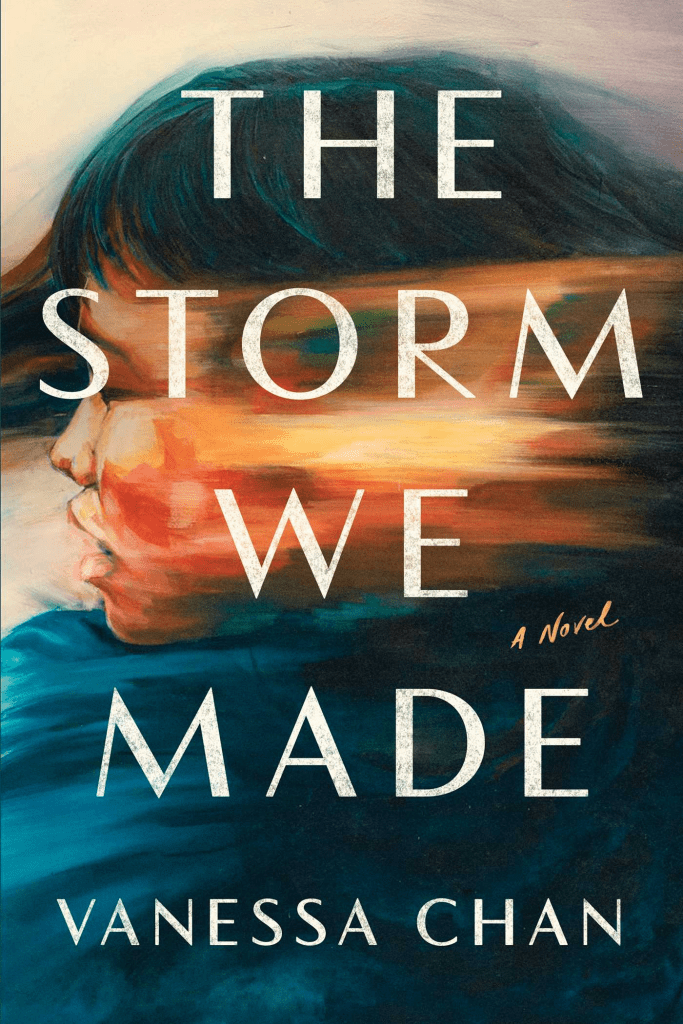
“The Storm we Made”

by Vanessa Chan

I knew I was entering dark waters, but I found the darkness in this historical novel of the Japanese occupation of Malaya during WWII even more disturbing than I had expected. The main character, wife and mother Cecelia Alcantaras. would be the one who “made the storm,” to reverse the words in the title. She fancies herself a heroine for the Malayan people to justify her infidelity with a Japanese general to whom she is inexplicably attracted. Ironically, the Japanese occupation of Malaya from 1941-1945 will make the locals welcome the return of British Colonialism at the war’s end.

Cecelia is not a likeable protagonist. She finagles her way into Fujiwara’s arms and other parts by volunteering to work as his informant; her chief source of classified information is her unsuspecting husband, Gordon. Cecelia is shameless in her pursuit of Fujiwara, feigning to faint at a party in order to draw her husband’s attention away from the study, where her lover will be able to snatch a key piece of intel.

Cecelia and Gordon have three children, and their compelling stories are told in alternating chapters. The details are tragic and heartbreaking. Early in the novel eldest daughter Jujube shuts youngest child, sweet Jasmine, in the dark basement to hide her from the soldiers who search out young girls to molest. But it will take more than a bolted door to protect the children of Malaya from the occupying Japanese. The only son Abel, once brave and loving, will endure unspeakable horrors of captivity.

The author successfully ties together various segments of the plot for a somewhat satisfying conclusion. However, there can be no happy ending for the woman who has betrayed the people who loved her most. By the end of the novel, Cecelia has unraveled; she has stopped bathing, eating, caring for her home, and seems to mumble incoherently. Whether from the loss of Fujiwara or from the intense guilt of what she has done is difficult to discern. The author tries to provide some measure of comfort in the form of a pleasant letter from an acquaintance of Jujube, but it is a trifle. Too many blood stained nightgowns, too many dead chickens, and too much filth.

The Crash

by Freida McFadden

It does seem a bit odd to give a low rating to a book that I could not put down and that I read in less than 24 hours. “The Crash” is a thriller in the same genre of Frieda McFadden’s earlier “The Housemaid,” but the plot, character development, and prose all fall short. Following the plot requires some suspension of preconceived notions of a typical plot outline, and developing empathy with almost any of the characters requires a suspension of typical moral judgement.

Determined to reach the “safety” of her brother’s home, Tegan, alone and pregnant, risks driving through a rural area in a severe snow storm. Tegan crashes her car, severely injuring her left leg, and is not only stranded in her crushed car in freezing temperatures, but also trapped and unable to move. The terror continues. The big burley country bumpkin who stops and saves her seems suspect; his wife seems too good to be true, and the basement bedroom they offer Tegan is eerily reminiscent of Nina Winchester’s attic apartment.

In her Acknowledgements McFadden shares that she rewrote her original draft of this book more times than she had for any of her previous books, and it shows. It is as if the author is driving down Plot Road, comes to a Y, and cannot decide to go right or left. And so she goes right, and then she changes her mind, doubles back and makes the left. Meanwhile, I as the reader in the passenger seat watch the blurred scenery, try to identify familiar landmarks and figure out where we are going, and consider that I may need to grab the wheel. Or cue Carrie Underwood.

Don’t let me stop you though! It is a great diversion of a novel; dinner will burn on the stove top, and phone calls will go unanswered for 24 hours. BUT don’t forget your map and your driver’s license just in case.

“The Warmth of Other Suns” by Isabelle Wilkerson

As someone who primarily reads fiction, I was a little intimidated by the 622 page “The Warmth of Other Suns.” However, Isabel Wilkerson quickly drew my interest into the real lives of the real people she chronicled in her ambitious non-fiction narration of the Great Migration.

Wilkerson tells the story of Ida Mae Gladney and her husband George, living in a share-cropper cottage in 1930’s rural Mississippi. Ida Mae is married and pregnant by 16, and George lacks options for upward mobility. Share croppers worked daily on the plantations sun up to sun down. Just a step up from slaves, their pay is a place to live, and a portion of the crops and livestock they tend to. They hang onto the hope of receiving some sort of cash from the owner at the end of the year; sometimes they get a small pittance, but most of the time they get nothing. The plantation owners protect their system; violence and threats of violence, and a lack of property ownership keep the share croppers living and working on the plantation.

George and Ida Mae, in anticipation of retaliation from their plantation owner, secretly plan their escape, and sneak out during the night to head north, riding in the “Jim Crow” car of the train. Once the train crosses the Mason-Dixon Line, theoretically, they can sit where they want. George and Ida Mae soon learn that they have escaped legalized segregation but not discrimination. The reader learns how George and Ida Mae gain employment and raise their family in spite of constant difficulties. I grew to care very much about Ida Mae and appreciated her living testimony to grace and determination.

Wilkerson introduced us to several other Blacks, such as George Swanson Starling and Robert Joseph Pershing Foster and their families, who leave the south for the cities of the industrial north and California. These gentleman escape the abuse of their southern white contemporaries and leave for good with their personal and compelling dreams, trials, and talents. Foster becomes a doctor, eventually achieving status and wealth in California, but he carries emotional scars with him until the his final days.

“The Warmth of Other Suns” reads at times like a fictional family saga, and at times like sociological study of human behavior, complete with statistics on crime and out of wedlock births.
The book provided rich context for my two fictional selections for Black History Month.

Reading Progress

January 27, 2025 – Started Reading

January 27, 2025 – Shelved

“Tom Lake” by Ann Patchett

Ann Patchett’s writing is lovely, and she does not need a thriller of a plot to keep the reader engaged; it is simply a pleasure to read each page. I am a lifelong fan of “Our Town,” and the mention of this play in a review is the reason I chose to read this book. Having also spent one summer of my teen years in summer theatre, the novel offered a second appealing element.

The combination of cherry picking near Lake Michigan, mother and daughter relationships, and the endearing nostalgia of “Our Town” creates a sweet diversion. However, if you haven’t read or seen “Our Town,” I think you may have a hard time making it half-way through “Tom Lake.” In its early stages the plot is dependent upon the casting of the play and the matching of the characters. If you make it past all that you just may find yourself invested in the relationship of Duke and Lara, even though we know they cannot end up together since Lara is married to Joe and has the three daughters to whom she is telling her story of young summer love.

Patchett captures the fragrance, the humidity, and the pace of summer in “Tom Lake.” You may feel, as I did, that you are reading the story, seated on a glider on a shaded front porch with a glass of lemonade. I liked it, and it may stick with me a while, but I don’t think it is for everyone.
3.6-4ish

The Heaven and Earth Grocery Store

by James McBride

My rating: 4 of 5 stars


Well, well, this was a quirky read. I was interested in it for a couple reasons; first of all, the good reviews, and, secondly, our son and his family live in Chester County, not far from Pottstown, PA, the setting of this story.

I had never heard of “Chicken Hill” or of any settlement of Jews, Blacks, or Eastern European immigrants in the Pottstown area. Known today as the home town of the Hill School, an elite and expensive boarding school, Pottstown, apparently, was born as an industrial town, and the immigrants were attracted by the work the factories offered. Slaves from the south came to Pottstown via the Underground Railroad and found it a good place to farm and settle. A significant number of Jewish families “immigrated from Philadelphia” to open shops and services to the existing community. This eclectic mix of residents didn’t always get along, but they leaned upon each other because they shared the commraderie of second class citizens, feeling the condescension of the WASP town founders.

As the tale begins, human remains are discovered in an old abandoned well. James McBride crafts his fiction around this mystery and eventually reveals the soul who perished, why he perished, and the responsible parties. In between the discovery of the body and the conclusion (and the in-between part is the bulk of the book) McBride introduces a multitude of variegated characters, families, and interconnections of the same. Dialogue is in the vernacular, which proves sometimes nearly inscrutible but occasionally entertaining. Moshe the well-respected and upright Jewish-Romanian theatre owner; his beloved Christian wife Chona, the grocery shop-keeper; African-American Nate who keeps his head down and stays mysteriously quiet; a talented shoemaker; a sketchy town doctor; a prophetess, and an assortment of townspeople each have a role to play in this drama! Neither people nor events are random as each is a necessary piece to the literary puzzle.

This book was a bit of a challenge for me at times. I would have benefited from a chart to keep the characters straight, and it was hard to detect progress in the plot. Halfway through I would have told you that there was no way this book was getting more than a 3 star rating. Nevertheless, the brilliant way in which the author wove this plot impressed me, and the story itself proved to be quite good. It’s a 3.5.


View all my reviews

“Good Night Irene’ by Luis Alberto Urrea

The Red Cross providers of donuts, coffee and smiles to the American GI’s

Good Night, Irene by Luis Alberto Urrea

My rating: 5 of 5 stars😊


“Goodnight Irene” is the first novel I have read by Luis Alberto Urrea. This historical novel follows two young women who leave their homes in 1943 for different reasons and head to Washington to apply for positions in the Red Cross “Donut Dolly” brigate. Apparently, the Red Cross had high standards for these applicants and only accepted one in six. Education, references, physical fitness, and bubbly personalities were required, and so our two protagonists Dorothy and Irene are interesting and smart! Urrea based his story on the experiences of his own mother as a Donut Dolly in WWII and created the character Irene from his mother Phyllis Irene.

One is tempted to draw comparisons and contrasts between “Goodnight Irene” and Kristen Hannah’s “The Women” since both are rare studies of women placed in harm’s way during war time. I found Urrea’s characters, especially Irene, to be more realistically complex than Frances McGrath of “The Women.” The narrator offers us access to Irene’s thought patterns during periods of intense trauma as well as in typical day-to-day life on the front. Both books have a love story element; however, the main relationship in “Goodnight Irene” is that of the friendship between Irene and Dorothy, two women from opposite backgrounds, with very little in common other than their devotion to their country and to each other. There are fights between them, periods of silent treatment, secrets kept, but ultimately it is the depth of this relationship, around which the rest of the story spins.

As with any story of war, the reader must expect tragedy, death, despair, and horror. Urrea smartly intersperses descriptions of beautiful countryside and even humor amidst the telling of difficult events. Certainly soldiers and volunteers would have to see some measure of joy and purpose and enjoy a laugh to maintain some sense of sanity . Some days there was no joy. One chapter deals with the ladies’ arrival at a liberated prison camp. Circumstances of war were more than some young ladies could handle and some left. Dorothy and Irene went through a few “third girls on the truck.”

The author takes some liberties with details, but he is faithful to the main historical events. His use of his mother’s letters and his historical research place the story of Irene and Dorothy soundly in the accurate places and stages of WWII Europe. PTSD hadn’t been named yet, but it is certain that it existed. Nightmares and invasive thoughts plague the women for decades after the war ends. Thank you, Luis Alberto Urrea, though, for writing a beautiful ending to this story. Most of us can handle anything as long as it ends well.

More about the Donut Dollies:https://redcrossnw.org/2021/06/03/the-wartime-tales-of-red-cross-donut-dollies/


View all my reviews

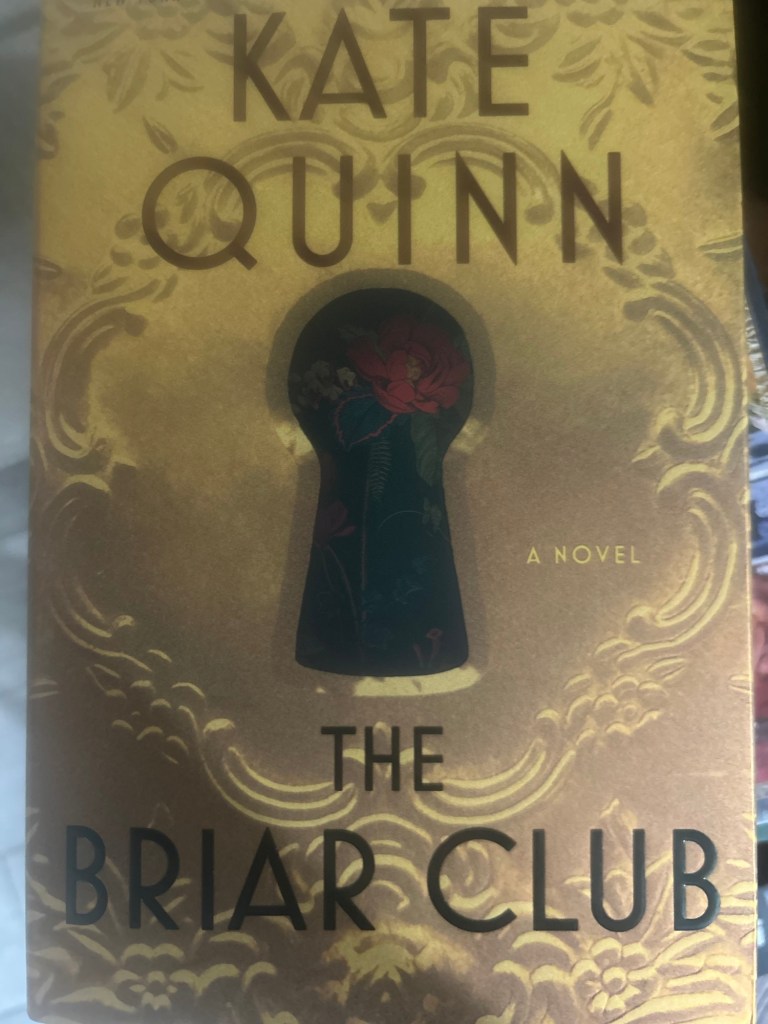
The Briar Club

by Kate Quinn

Kate Quinn night at the Oxford Exchange in Tampa. I went with a friend, left with a new one too! In between I enjoyed a delish French 76 and gleaned some valuable tips from the writers.

After attending a Kate Quinn presentation and book signing, I let this book sit on my dresser for two weeks. I glanced at it daily, but I intentionally read two other books first, in order to save this one. You know why, of course, because once you start a book you’re a step closer to finishing it. And when you finish it, it’s over, ba da da dum, like a serving of a rich chocolate dessert in a bowl you’ve licked clean, and it’s not refillable. “The Briar Club” was entertaining, and educational, as are all Quinn’s books, but in this case the book came up just a bit short of my expectations as if there just could have been a little more chocolate syrup.

There are some very likable and intriguing characters staying at the boarding house, and a querious landlady and family. Add to the mix a series of potential suitors for these ladies of The Briar Club residence, possible gansters, politicians, some with ill intent and some with true intentions. My favorite character was actually The Briar Club, that is the house, itself! Through the clever use of personification (remember that term from high school literature class?) Quinn gives voice and emotion to the boarding house, adding a quasi-omscient viewpoint to the various POV’s of the human characters.

Washington in post WWII 1950 was abuzz with MCarthyism, which also plays a role in this novel. Could one of these lovely ladies be a communist? Or a spy? Who are these people, really? This is not an edge-of-your seat thriller like “The Huntress,” but there are some strong female characters here and fresh views into a period of our history that doesn’t get much attention these days. Quinn fans rest assured, there may not be much violence, but there is murder or two. On another note, the author shares some quirky recipes along the way that complement the residents’ attempts to create tasty comfort food for each other. However, if you find yourself dozing off more than once as you wade through the middle chapters, (as I must confess I did) you will be rewarded with a solidly satisfying ending.

Reading my way through 2024

HISTORICAL FICTION

“The Women” by Kristin Hannah

The bookseller’s world hyped Kristin Hannah’s newest novel months in advance. In enthusiastic anticipation, I preordered, but when my copy finally arrived early February, I placed it on my bookstack, not wanting to read it immediately, but to save it like a piece of dark chocolate with a glass of cab for bedtime. Eventually, there was one rainy day, and there have been so few this year that I could probably pinpoint it on the calendar; I picked up “The Women” early in the afternoon, and by the time I went to bed that night I had completed my reading.

Not all reviews of this book are complementary. Hannah’s writing is not her best in this book, but then I don’t read Kristin Hannah for a linguistic study, I read her for her storytelling. She tells a whopper of a story in “The Women.” She also educates the reader on the realities of life as an Army nurse during the Vietnam War. One section of the book is especially difficult to read; emotion must be turned off to continue. The heroine, Frances McGrath, grows into her role in life and becomes an amazing woman of strength, commitment, and morals. I don’t want to give away any of the details.

Kristin Hannah succinctly summarized her desired impact of her latest novel, “For all its weight and importance, which I do think the book has, it is also—I hope—an unputdownable read that you can’t wait to talk to your best friend about.”

I could not put it down. I read all 480 pages in one day, and, upon finishing, my first thoughts were about telling my daughters and best friends about it. Bravo Kristin Hannah!! I may start re-reading it today.

MAGICAL FICTION

“The Lost Bookshop” by Evie Woods

I bought this book in October, and I put off reading it until March. I had picked up a stack of library books, and I told myself that I must finish reading those first! At last I completed those and allowed myself the treat of reading this one as a reward. . . . So is it obvious that I am the type of person who would read a book about books?!

“The Lost Bookshop” is inherently about the joy of books, but its value is deeper. Irish writer Evie Woods weaves a literary tapestry which draws together Henry and Martha, Opaline Carlisle or Gray, metaphysical Mrs. Bowden, and Emily Bronte. The plot involves dreadful societal evils like domestic violence, war crimes, out-ot-wedlock pregnancy, unjust institutionalization, and alcoholism. However, cruelty does not squash the characters’ mission or resilience!

Evie Woods cleverly employs a touch or two of unrealistic elements, popularly referred to as “magical realism”. As in any truly good story, love conquers all, loose ends are tied up, and a simple twist in the plot completes the tale in a delightful conclusion. I want to read more of her books.

HISTORICAL FICTION

“The Forest of Vanishing Stars” by Kristin Harmel

“The Forest of Vanishing Stars” is my favorite of the books that I have read so far this year. The beginning chapters of the book seemed a little mystical or surreal, and I was not sure where Kristin Harmel was going. The first character we meet is Jerusza, a witch-like woman who lives completely independently in the woods without human companionship or the desire for such. She is able to know of things before they happen, and so she kidnaps a toddler girl from her German Nazi parents to “save” her.

Despite her strangeness and disagreeable personality, Jerusza is brilliant and a devout Jew. She raises little Yona alone, separated from civilization in the deep woods, teaching her intricate survival skills, and educating her in languages, cultures, medicine, and every subject of academic study through books she steals from villages.

Eventually, Jerusza dies as an old woman at exactly the age she knew she would die. Thanks to her years of instruction, Yona, who is now a young woman, has all the skills she needs to survive in the forest, but she longs for human companionship. Soon she will meet other humans and experience the joy and the pain of relationships.
Given the time period, it is inevitable that Yona will meet up with Jews fleeing the ghettos, and that Germans will hunt them.

The reader also anticipates that Yona would somehow be reunited with at least one of the parents from whom she had been kidnapped as a toddler. So yes, there is some predictability to the plot, but the story of Yona is exceptionally original, and her story is one of bravery, faith, and love. Excitement, mystery, real historic events, a vividly described setting, and thorough character development make this my favorite of 2024 so far.

NON-FICTION

“Paul the Traveller: St. Paul and his World” by Ernie Bradford

Ernle Bradford’s “Paul the Traveller” is an engaging account of St Paul’s mission to preach the gospel to the whole world, or the known world of his time. Bradford’s vast knowledge of the Mediterranean civilizations in the first century AD is evident, and he draws from both Scriptural and Historical documentation to reveal the depth of Paul’s character and motives.

My understanding of the Roman Empire, the Mediterranean cultures, the early Christian church, and the person of St. Paul has grown remarkably from reading this non-fiction account. First, the Roman Empire; we all learned in social studies class about the excesses of the Romans, which lead to the downfall of the nation. However, I had no idea just how grave these excesses were. If you think our current society is “going to hell in hand handbasket,” the behavior of the Romans will make you appreciate our current mores. Roman society was extremely barbaric, glorifying violence and cruelty for entertainment, and the people of the era reveled in idolatry and perversion.

Also of interest were the relationships between the Jewish sect of the time, the Romans, and the Greeks. Paul was born and raised a devout Jew, and uniquely, a Roman citizen. His conversion to Christianity strained his relationship with his Jewish brothers and sisters because he was the foremost defender of Gentile converts not having to practice Jewish law.

I had previously felt sympathetic towards Paul; his list of beatings, stonings, shipwrecks, and other persecution in II Corinthians has always caused me to see him as a suffering servant. Ernie Bradford presents Paul as multi-dimensional; suffering, yes, but a master of his own fate. His boldness, and his intentional perseverance directly lead him to conflict after conflict, that a different apostle would have avoided. Towards the end of his life, he is deliberate in his intent to go to Jerusalem and on to Rome, where surely there will be no happy ending.

“Paul the Traveller” is very enlightening on BOTH the historically and spiritually significant time period and the individual. Paul was a fascinating man of unquenchable spirit of whom his Lord must have said, “Well done, good and faithful servant.”

Bubbie’s Book Blog May 2024

Apparently “Bubbie’s Book Blog” is a tongue twister.

They Turned the World Upside Down, and I returned this book to the library.

“They Turned the World Upside Down” by Charles Martin

I decided to read this book based on a recommendation on a Historical Fiction facebook page. Expecting Biblical fiction along the lines of “Ben Hur” or “The Chosen,” I delved in.

The first thing I learned is that this author previously wrote a book called “What If It’s True?” Charles Martin refers to it at least ten times in the first two chapters, to the point that I felt like he was insisting I read that one before this one.

My second observation was that this book is only 1/3 historical/Biblical fiction. Each chapter does contain a section portraying one scene of the Biblical life of Christ, complete with fictional dialogue with his disciples. In my opinion the tone of Martin’s characters’ dialogue is a clearly male version of “one of the guys,” leaning uncomfortably close to irreverent. The second section of each chapter is an analysis of the Biblical-fictional part. Martin emphasizes that the Grace of Jesus is always stronger than our sin, to which I say a hearty “Amen!” The final section of each chapter is a lengthy personal prayer on behalf of Martin and his readers. The juxtaposition of fiction and non-fiction didn’t resonate with me. Nor did the depth of his focus on shame and sin in the prayers. The Grace of Jesus is always stronger than sin, but the prayers are laden with the grief and shame of someone who is not embracing Grace.

After 7 chapters, I have had enough. I’m glad I picked it up at the library instead of paying for it at a book store. I will return it today. It may very well speak to some readers, but I found it more of a hindrance than a help to my spirit.